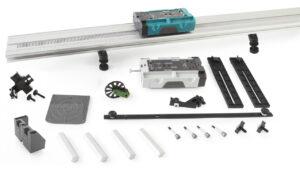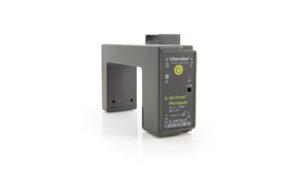
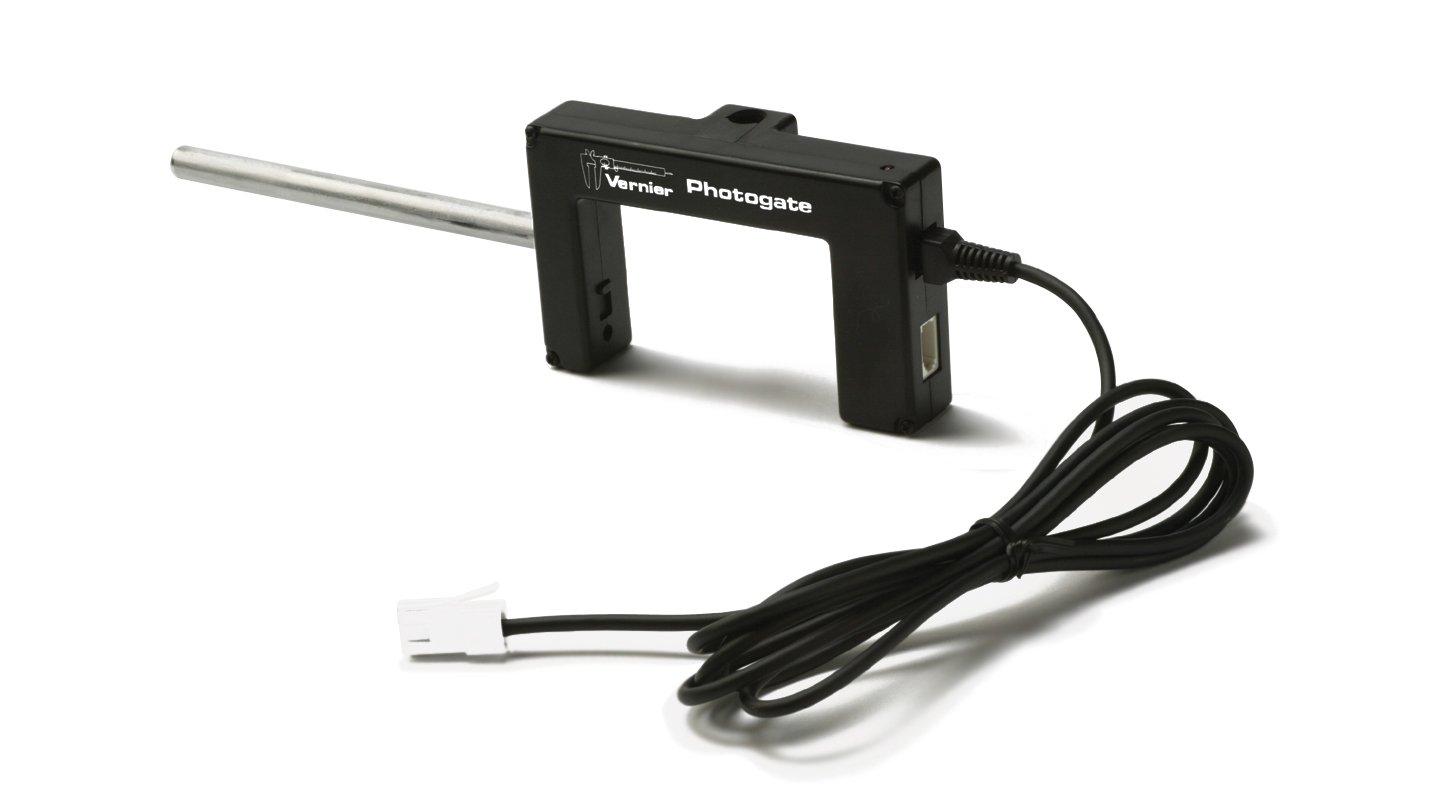
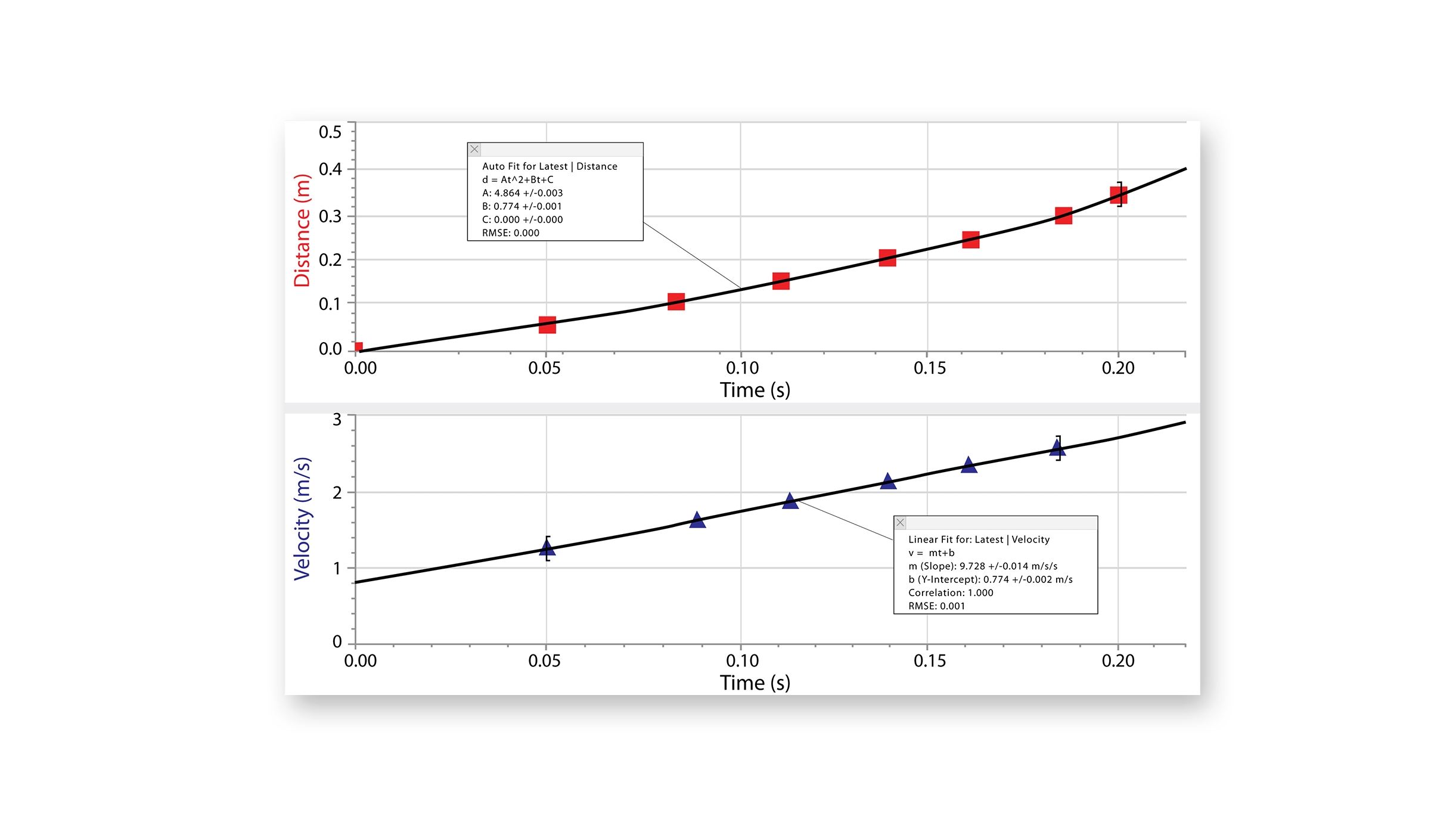
Photogates allow for extremely accurate timing of events within physics experiments, for studying free fall, air track collisions, pendulum periods, the speed of a rolling object, among other things. The Vernier Photogate includes an accessory rod for mounting to a ring stand.
The gate has an input port so multiple gates can be connected in a daisy-chain configuration with up to four gates going to a single interface channel.
The laser gate mode requires the addition of a common pen laser, which is directed into the laser port. The laser may be some distance from the gate, so that you can measure the speed of larger objects such as a rocket, model car, or even a real automobile.