
Is the air in your classroom actually cleaner than the parking lot outside? Your students probably have an opinion—but do they have the data? Vernier biology expert Colleen McDaniel and chemistry expert Dr. Melissa Hill walk through place-based air quality investigations that help students connect real environmental data to the health of their own communities.
You will
- Learn how to frame air quality monitoring as place-based learning, starting with a local case study and using it to spark student-driven questions
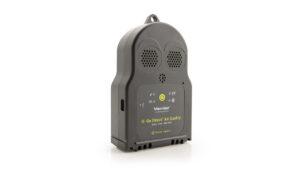
- Learn how to use the Go Direct® Air Quality Sensor to measure specific parameters like particulate matter, nitrogen dioxide, ozone, and VOCs, and understand what each one means for human and environmental health
- See how indoor/outdoor comparisons and traffic monitoring investigations generate meaningful data
- Connect air quality data to bigger chemistry concepts, including photochemical smog, acid deposition, and the science behind the Air Quality Index
Whether you’re a biology, environmental science, or chemistry educator, a curriculum coordinator, or a science leader looking for compelling fieldwork investigations, this webinar will show you how to give students the tools to go beyond a generic AQI number and truly understand what’s in the air around them.