
Sharing ideas and inspiration for engagement, inclusion, and excellence in STEM
Whether it’s through science fiction novels, engaging literary nonfiction, or comics, educators are finding creative ways to bring literacy into STEM learning. These approaches echo the research‑backed connections between Common Core literacy standards and the NGSS Science and Engineering Practices, particularly in the areas of argumentation, communication, and evidence‑based reasoning.
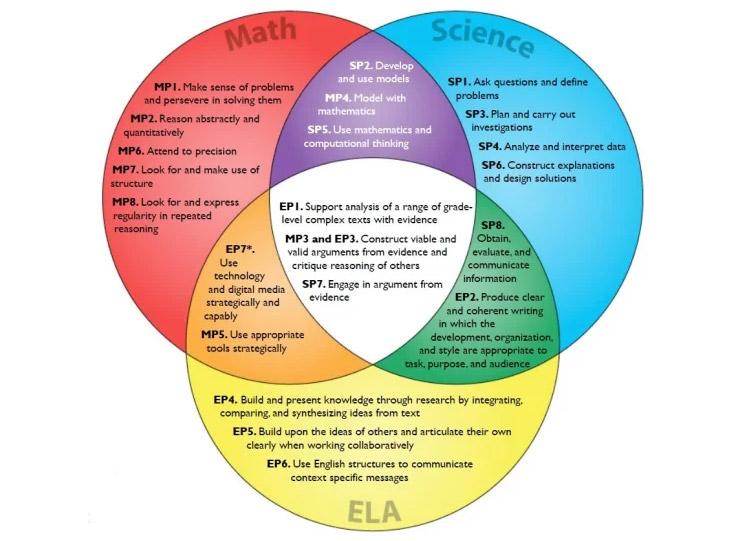
As outlined in the Literacy for Science report from the National Research Council, building literacy in science isn’t just about reading more—it’s about helping students analyze texts, interpret evidence, and make sense of scientific ideas through language.
Here’s how some teachers—and a few of us here at Vernier—are making those connections real in their classrooms.
A Sci-Fi Novel Made for a Phenomena-Based Classroom: Project Hail Mary
Nick Watkins, Vernier Trendsetter
Science Teacher & Department Chair at Franklin Pierce High School, Tacoma, WA
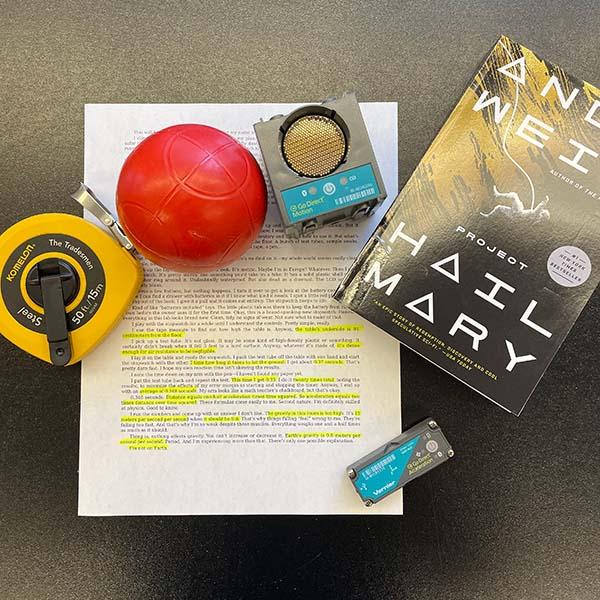
I use Project Hail Mary by Andy Weir in my advanced physical science class, which is a mix of freshmen and sophomores. The book reads like it was made for a phenomenon-based classroom: every chapter presents a new challenge that the protagonist solves using real, accessible science. It’s like a giant word problem—but more fun!
What I love most is how accessible the science is. The writing doesn’t just drop jargon like “quantum blah blah,” and leave it at that. Instead, he makes an observation (like, “Hmmm, the gravity seems really strong here.”) and then shows his process (“I dropped my pen 30 times, took the average, and used this equation to calculate gravity.”) That’s the kind of thinking I want my students to do—make observations, collect data, and use what they know to solve a problem.
As we read, we pair chapters with hands-on investigations. When the astronaut uses a pendulum to determine gravity, we do too, using photogates to confirm our predictions. When he talks about rockets, we build water bottle rockets and measure their velocity. Every lab is tied to the storyline while bringing students back to key concepts like Newton’s laws and motion.
Not every student is a big reader, of course, but even those who struggled with the text got into the investigations. Close reading strategies helped. I used templates from ELA teachers and online resources to focus on specific sections of each chapter so that all students, regardless of reading pace, could engage with the science challenge.
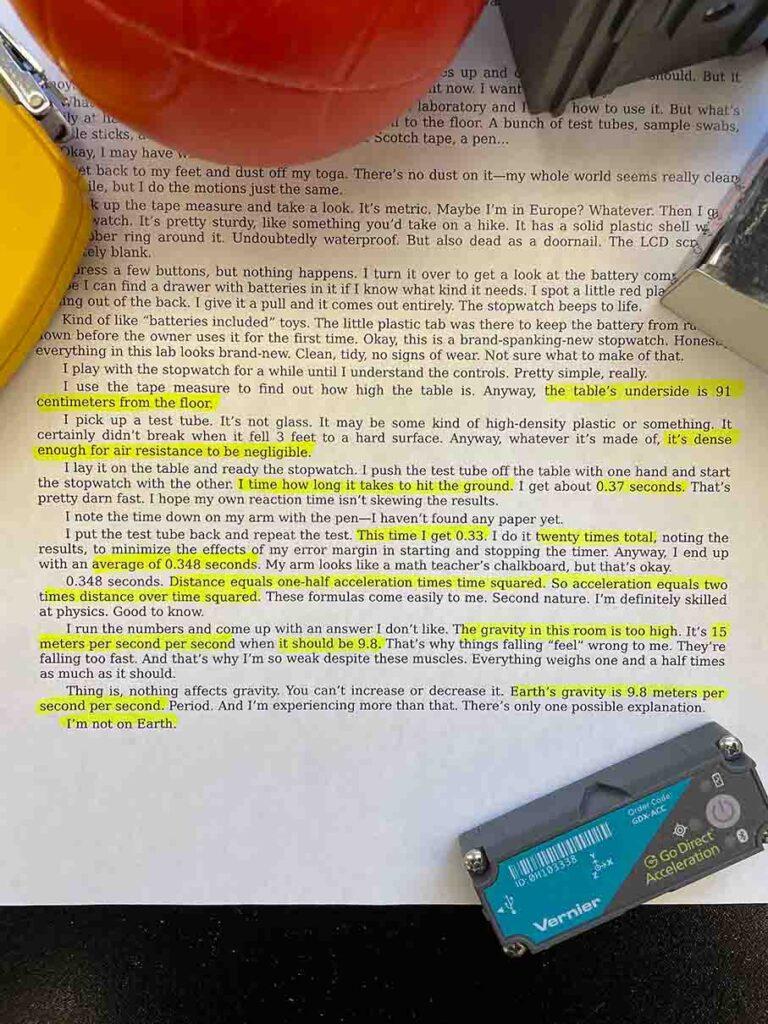
Go Direct® Acceleration Sensor
Engage Cross-Cutting Interests with Summer Reading Programs
Sarah Shaw, Vernier Trendsetter
Science Teacher at Jackson Preparatory School, Flowood, MS
I’ve participated in several summer reading programs where teachers offered different books and students chose which one they wanted to read. One of the most memorable was The Immortal Life of Henrietta Lacks, which led to valuable discussions about biology, cell replication, and medical ethics. The publisher also offers a free teacher guide with great guided reading and discussion questions tied to CCSS 9–12 ELA standards for reading informational texts and engaging in evidence-based discussions and writing.
Another favorite was The Demon in the Freezer, which focuses on smallpox, vaccination efforts, and the lingering threat of biological warfare. I gave short quizzes to check for understanding and followed up with a discussion about the scientific and social issues each book raises.
While these books weren’t tied to specific experiments, they did get students thinking critically about science in the real world. I’ve since picked up The Premonition, which explores how pandemic policy decisions were made, and Napoleon’s Buttons: How 17 Molecules Changed History, which connects chemistry to historical events. I haven’t used those with students yet, but they’d be great choices for future reading groups or independent projects.
I love how nonfiction science stories like these pull everything together—biology, chemistry, public health, ethics, history, etc. My background spans all the sciences, so every time I teach a subject, I end up saying, “Okay, well, we’re going to go into chemistry now,” or “Let’s talk about biology,” because I can’t stick to just one. If there’s a chance to make a crossover, I take it.
Chemistry, Comics, and the Power of a Good Story
Dr. Melissa Hill, Director of Chemistry
Vernier Science Education
If I were teaching today, I’d bring in The Disappearing Spoon by Sam Kean. It’s full of quirky, human-centered stories behind the periodic table—perfect for helping students connect with chemistry content in a more accessible way. It also works well in small excerpts, which makes it ideal for supporting reading comprehension with ELL students. Paired with discussion or writing prompts, it supports literacy in science and technical subjects, especially close reading and analysis of informational texts.
For a forensics unit, The Poisoner’s Handbook is another great choice. It blends true crime with chemical analysis in a way that’s immediately engaging. And even when I didn’t assign certain texts—like this rather graphic poem about DNA molecules—students still found them on their own. That tells you something about how powerful language and stories can be.
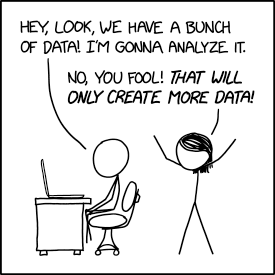
When I was in the classroom, I often used comics like XKCD or PhD Comics. I’d post one each week and talk through it with students—sometimes even using them on exams as extra credit. The Manga Guide to Biochemistry was also popular, especially with my Japanese students who often brought in Japanese editions! These all gave us a fun, meaningful way to access science ideas from different angles, while supporting literacy and content understanding at the same time.
Case Studies That Keep Students Reading and Reasoning
Dr. Sara Tallarovic, Biology Staff Scientist
Vernier Science Education
When I was teaching biology, one of my favorite ways to combine literacy and science was through case studies—especially the ones from the National Center for Case Study Teaching in Science (now hosted by NSTA). These real-world scenarios are broken into chunks, so students get bits of the story at a time, building their understanding as they go.
What I love about this format is that it encourages students to slow down, read more carefully, and discuss what they are learning along the way. Each section introduces new information or evidence, and students have to adjust their thinking, revisit earlier ideas, and make claims backed by scientific reasoning. It’s a great way to practice the kind of close reading and collaborative analysis called for in ELA standards—while still staying rooted in scientific concepts.
The case studies are free to access, though an NSTA membership is required for the teacher notes. With the new search tool, it’s easy to find examples that match your grade level and topic. The collection is peer-reviewed, covers a wide range of subjects, and is a fantastic resource for any teacher looking to bring more reading, discussion, and sensemaking into their science classroom. Don’t sleep on it!
Solving Forensic Chemistry Mysteries Through Storytelling
Nüsret Hisim, Chemistry Educational Technology Specialist
Vernier Science Education
During my 34 years teaching chemistry and physics in Maryland public schools, I found that framing lab activities as real-world scenarios made a huge difference in how students engaged with the material. They were always asking, “When am I going to use this?”—and forensic science gave them an immediate answer.
That’s one of the reasons I helped develop Forensic Chemistry Experiments, our newest lab book. In each activity, students take on the role of investigators, using data to solve a fictional case. In “The Case of the Poisoned Wine,” they analyze absorbance spectra with a Go Direct SpectroVis® Plus Spectrophotometer to identify a toxin (don’t worry, we just use food dye) after a wine tasting goes wrong.
Even though the cases are fictional, the storytelling creates real buy-in. Students are more motivated to read closely, think critically, and communicate their findings—skills that align with ELA standards for literacy in science and technical subjects, as well as the SEPs in NGSS. They learn to write explanations supported by data, follow multistep procedures, and engage in evidence-based reasoning—all within a creative context that makes the science stick.
Share this Article
Related Articles





Sign up for our newsletter
Stay in the loop! Beyond Measure delivers monthly updates on the latest news, ideas, and STEM resources from Vernier.