
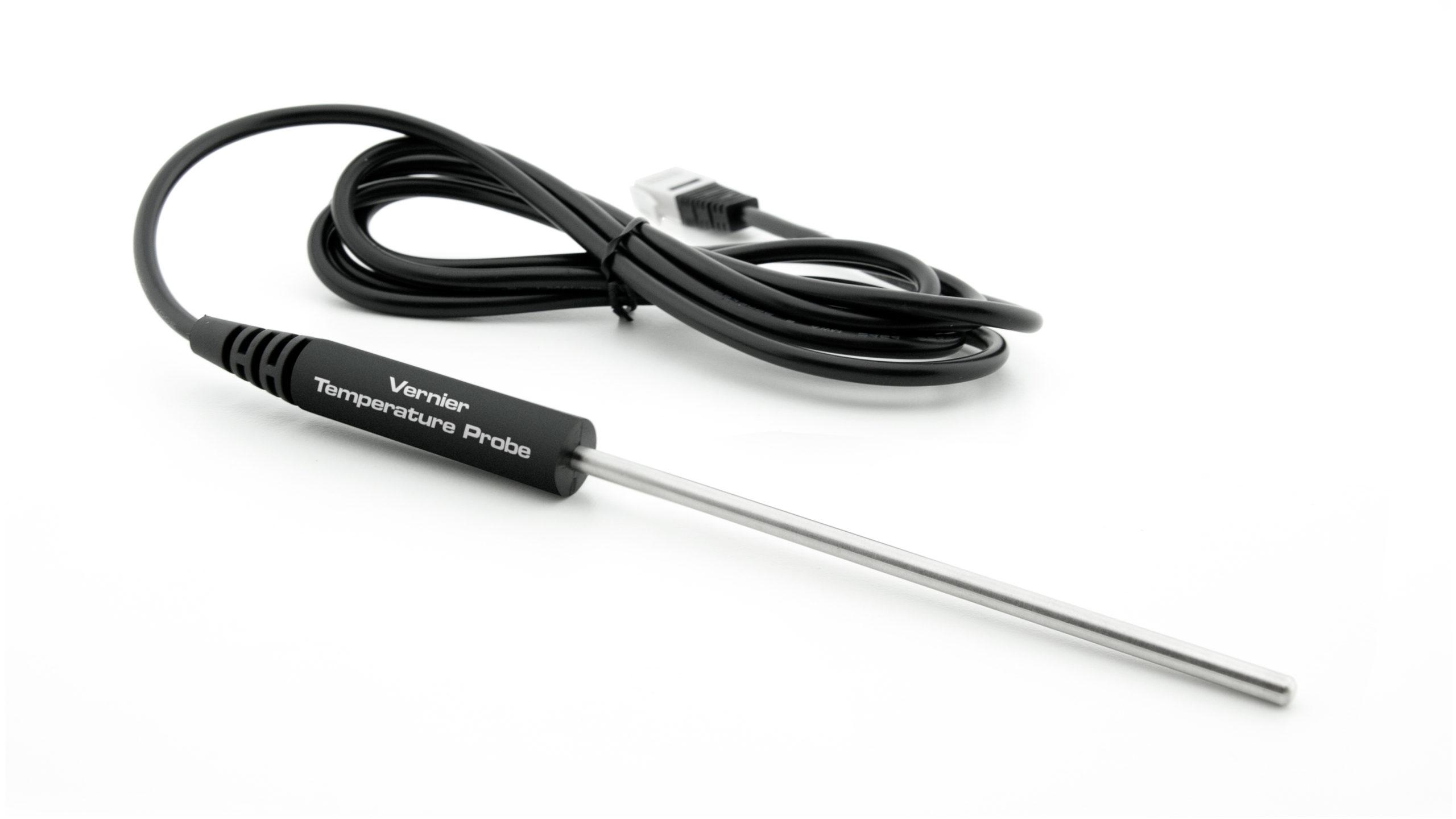
 Stainless Steel Temperature Probe
- Stainless Steel Temperature Probe
- The Stainless Steel Temperature Probe is a rugged, general-purpose temperature sensor that can be used in organic liquids, salt solutions, acids, and bases.
- https://www.vernier.com/product/stainless-steel-temperature-probe/
- Stainless Steel Temperature Probe User Manual
- Specifications · 0.17°C (–40 to 0°C) · 0.03°C (0 to 40°C) · 0.1°C (40 to 100°C) · 0.25°C (100 to 135°C).
- https://www.vernier.com/manuals/tmp-bta/
- Surface Temperature Sensor - Tech Tips
- The Surface Temperature Sensor is designed for use in situations in which low thermal mass or flexibility is required, or for a skin temperature measurement ...
- https://www.vernier.com/video/surface-temperature-sensor-tech-tips/
- Stainless Steel Temperature Probe Troubleshooting and FAQs
- Feb 29, 2016 ... Specifications · Temperature sensor: 20 kΩ NTC Thermistor · Temperature range: –40 to 135°C (–40 to 275°F) · Maximum temperature that the sensor ...
- https://www.vernier.com/til/1392
- Can you calibrate a Stainless Steel Temperature Probe?
- Sep 2, 2011 ... In most cases, the Stainless Steel Temperature Probe will never need to be calibrated. It is calibrated extremely well before it ships.
- https://www.vernier.com/til/1310
- Surface Temperature Sensor
- For temperature measurements in harsher environments that require a more durable probe, we recommend our Stainless Steel Temperature Probe. Surface ...
- https://www.vernier.com/product/surface-temperature-sensor/
- My Stainless Steel Temperature Probe won't fit snugly in a ...
- The standard hole size in regular stoppers is larger than the diameter of the Stainless Steel Temperature Probe. One solution is to drill your own holes in a ...
- https://www.vernier.com/til/2009
- Wide-Range Temperature Probe
- It is designed to be used as you would use a thermometer for experiments in organic and inorganic chemistry, physics, biology, Earth science, and environmental ...
- https://www.vernier.com/product/wide-range-temperature-probe/
- Go!Temp
- We've made it easy to use technology to teach science concepts with Go!Temp. Plug Go!Temp directly into your computer or Chromebook USB port to start ...
- https://www.vernier.com/product/gotemp/
- Watts Up with the Freezer
- To find out, we used a LabQuest and a Watts Up Pro to log the data over a 48-hour period. Related Products. Stainless Steel Temperature Probe. Add to cart ...
- https://www.vernier.com/video/watts-up-with-the-freezer/
- Why does my temperature sensor read a value that does not change and is very high/low?
- If the reading of a or never changes or gives erroneous readings, it is probably damaged and can not be repaired. Often a damaged sensor...
- https://www.vernier.com/til/2345/
- What stainless steel alloy is found in the Resistive Rod Set?
- The has several different diameter brass rods, as well as single diameter rods of aluminum, copper, music wire, and stainless steel. The Instructor notes for...
- https://www.vernier.com/til/16626/
- Surface Temperature Sensor Troubleshooting and FAQs
- Specifications and User Guide Troubleshooting Important: This sensor is for use in air and water only. For temperature measurements in harsher environments, we recommend the...
- https://www.vernier.com/til/1391/
- What is the Difference Between Auto-ID Sensors, Non-Auto-ID Sensors, Smart Sensors, and Go Direct Sensors?
- A non-auto-ID sensor must be manually identified, regardless of the data collection program in use. Most sensors that are older than 1999 are non-auto-ID. Note...
- https://www.vernier.com/til/1463/
- How is the temperature compensation calculated on my conductivity probe (CON-BTA)?
- The is automatically temperature compensated between temperatures of 5 and 35°C. Note that the temperature of a solution is being read by a thermistor that...
- https://www.vernier.com/til/2959/
- What do I need to purchase to do the prescribed practicals in IB Chemistry?
- IB Chemistry standards for lab practicals are listed on this website from Diploma Programme, Chemistry teacher support material Teachers are required to develop a practical...
- https://www.vernier.com/til/4085/
- Why does the Go Direct Air Quality report a higher temperature?
- The has a temperature channel as one of the many sensors included on it. This sensor is located inside the body of the particulate matter...
- https://www.vernier.com/til/26984/
SAVE/SHARE YOUR CART