EKG Sensor
Recommended for College and High School. Interface and software sold separately.
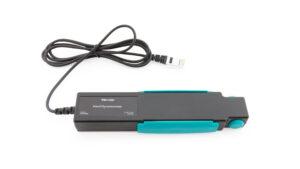
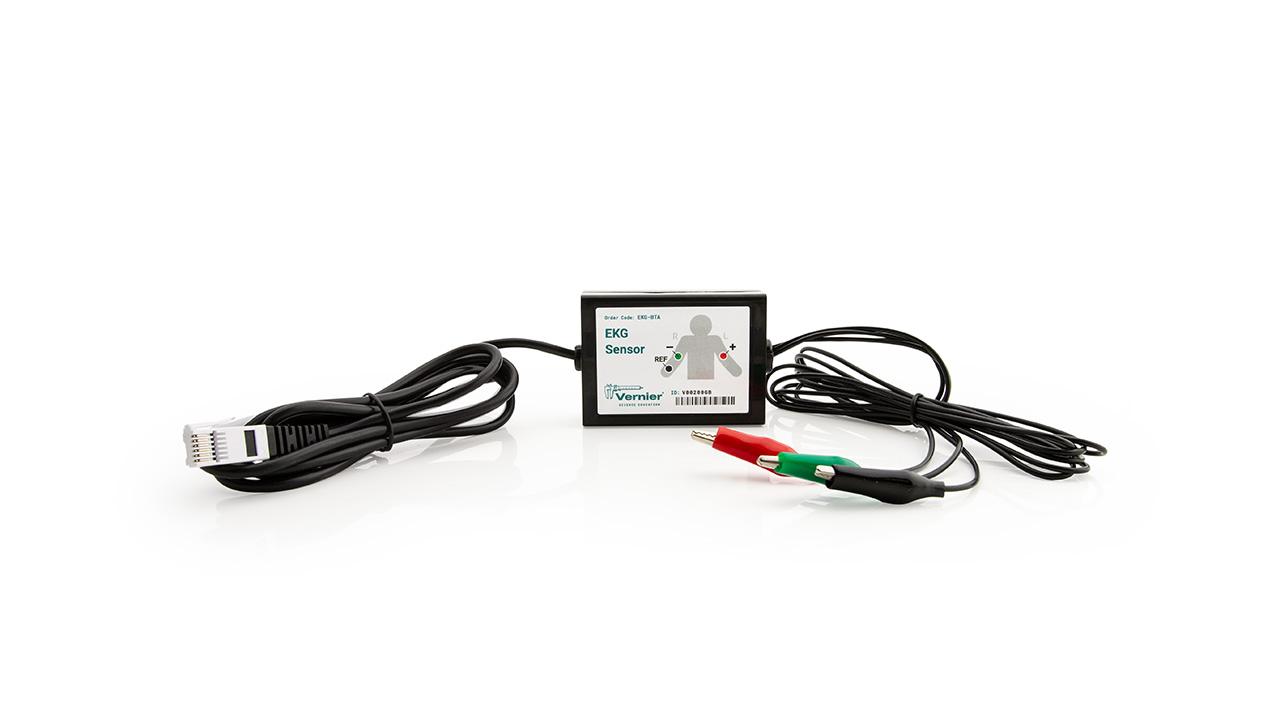
The EKG Sensor measures electrical signals produced during muscle contractions, and can be used to make standard 3-lead EKG tracings or surface EMG recordings.
Description
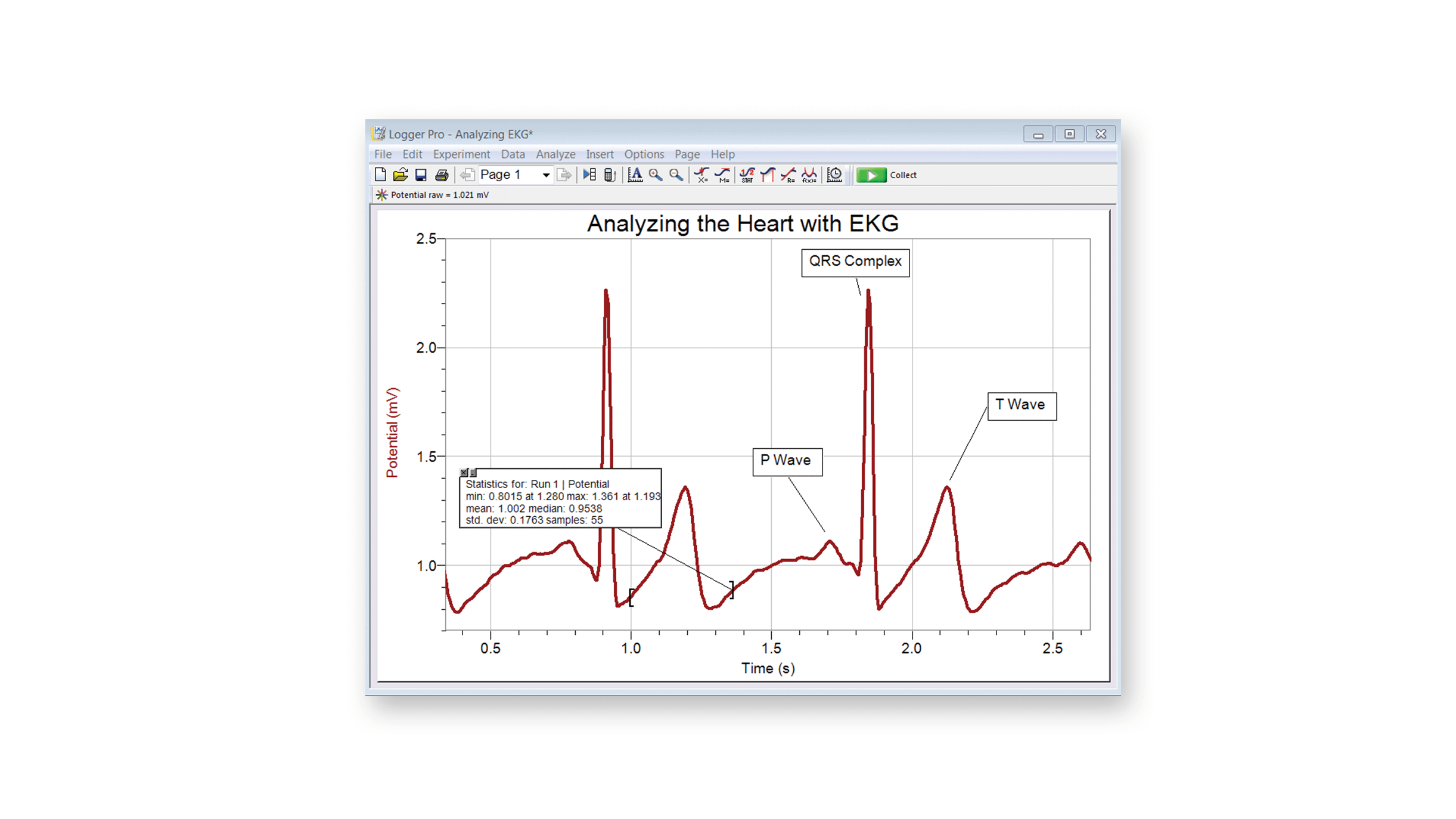
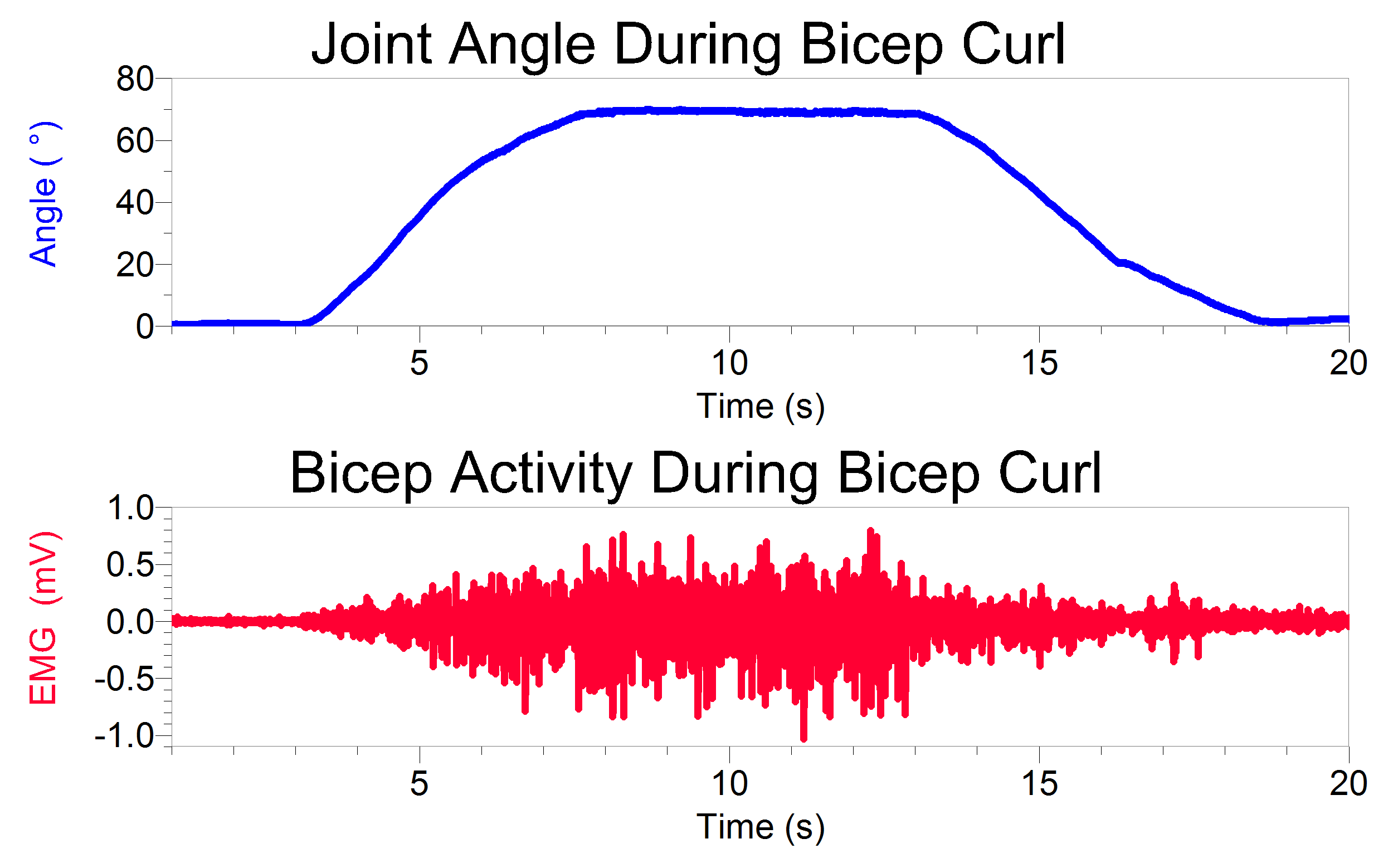
The EKG Sensor measures cardiac electrical potential waveforms (voltages produced during the contraction of the heart). It can be used to make standard 3-lead EKG tracings to record electrical activity in the heart, or to collect surface EMG recordings to study contractions in muscles in your arm, leg or jaw.
Specifications
- Offset: ~1.00 V (±0.3 V)
- Gain: 1 mV body potential / 1 V sensor output
Experiments and Lab Ideas
Select a lab book to see a list of experiments and more information.

Human Physiology with Vernier (6)
Includes student instructions, teacher tips, safety information, and sample data.
Go to Book Page
Engineering Projects with NI LabVIEW and Vernier (1)
Includes student instructions, teacher tips, safety information, and sample data.
Go to Book Page
Biology with Vernier (1)
Includes student instructions, teacher tips, safety information, and sample data.
Go to Book Page
Lab Ideas and Innovative Uses
What’s Included
- Vernier EKG Sensor
- A package of 100 disposable electrodes
- User manual
Sensor Requirements
The EKG Sensor requires a compatible interface and software to collect data. Interface and software sold separately. Getting started with probeware »
Compatible Interfaces
The EKG Sensor is compatible with these interfaces:
Ordering Information
Related Products
Educational use only: Vernier products are designed for educational use. They are not appropriate for industrial, medical, or commercial applications. Product usage disclaimer »