Sharing ideas and inspiration for engagement, inclusion, and excellence in STEM
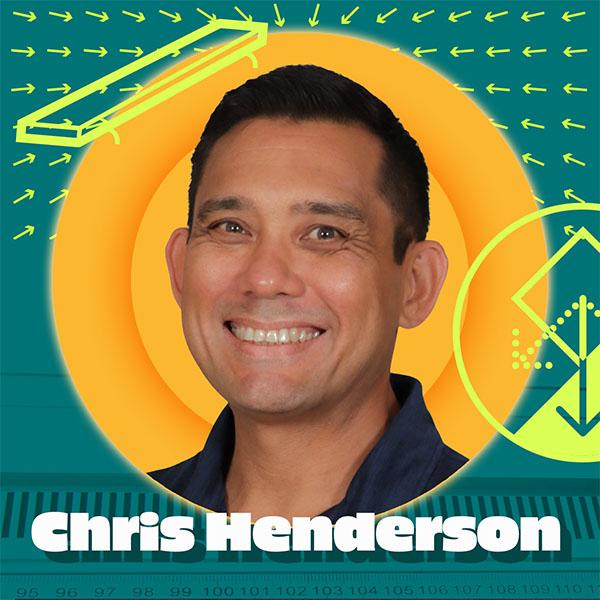
For more than two decades, Chris Henderson, a National Board Certified Teacher, has helped students understand how science connects to the world around them through hands‑on investigation, critical thinking, and collaborative problem‑solving centered around scientific data.
Using the Modeling Instruction approach alongside Vernier data‑collection technology, Henderson gives his physics students the opportunity to collect, analyze, and interpret real-time data to uncover patterns, test ideas, and build evidence‑based understanding. This helps students learn how to think, reason, and make informed decisions—all important skills students can use in and out of the physics classroom.
District Snapshot:
Round Rock Independent School District
Round Rock, Texas
• 46,150 students
• 56 schools, including 7 high schools
• 96.6% graduation rate
“To have actual science, you need solid data,” said Henderson. “The more reliable your data is, the more time you can spend analyzing what it means and discussing the relationships behind it.”
Shifting from Teacher Demonstrations to Student‑Led Discovery
Henderson, a Vernier Trendsetter who teaches on‑level and AP Physics in Round Rock Independent School District in Texas, understands that physics concepts like motion, force, and acceleration can feel abstract and inaccessible when delivered through textbooks or teacher demonstrations alone. That’s why he makes sure students take the discovery process into their own hands.
Henderson encourages students to take an active role in their learning and promotes the use of hands‑on probeware during physics investigations. This approach is backed by research that shows integrating probeware in STEM instruction boosts student motivation, particularly in subjects that are often perceived as difficult or abstract, while providing them with immediate and tangible feedback.
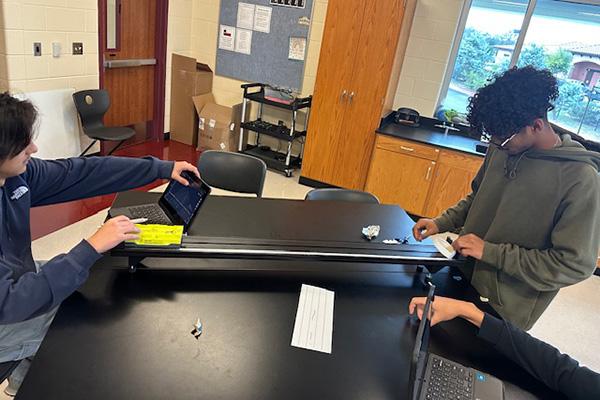
Throughout Henderson’s physics units, students design experiments, collect their own data using Vernier sensors, and analyze results using real‑time graphs. In one standout investigation, students are challenged to engineer their own safety solution to withstand a simulated collision—a task that mirrors the work of real scientists and engineers.
Using Go Direct® Force and Acceleration Sensors and Go Direct Sensor Carts from Vernier, students crash a cart into a barrier to collect velocity and force data. They then design and test prototype “bumpers” made from cardstock to reduce the impact force, and analyze data to determine whether their design improves passenger safety.
“By examining their data and using evidence to support their reasoning, students are mirroring the work scientists and engineers are doing in the real world,” said Henderson.
This kind of investigation shifts the classroom from passive learning to active exploration—and research shows that when students pursue questions connected to their own interests, they’re more likely to connect those experiences to core learning goals and retain what they’ve discovered.
“Because the data is theirs, they take ownership of it and start identifying patterns and asking more questions,” said Henderson. “This helps them move beyond memorizing formulas and move to understanding underlying physics. They can really start applying what they are learning.”
Try It in Your School: The bumper design challenge is one of many investigations where students use real force and motion data to solve an engineering problem. Looking for a ready‑to‑use version your teachers can pick up and run? Visit the Vernier blog for a similar experiment, the Crumple Zone Challenge.
Better Data Means More Time for the Conversations That Matter
One of the most practical benefits Henderson points to is how Vernier technology changes the way classroom time is spent.
“In investigations using traditional stopwatches or spring scales, there can be a lot of error and inconsistent data. Teachers can also find themselves explaining what results should look like rather than allowing students to analyze their own findings,” said Henderson.
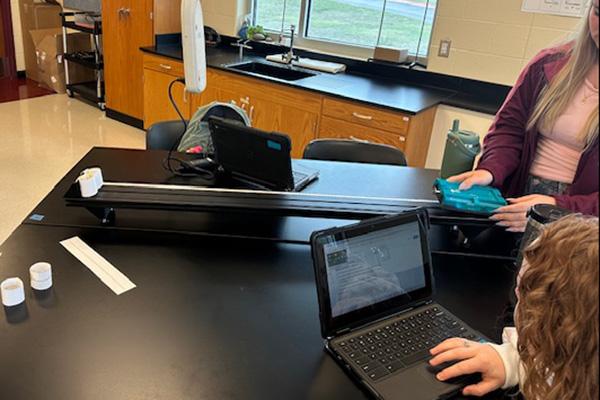
“The data collected with Vernier technology is just so much more reliable and precise,” he added. “And, since the data‑collection process overall is much quicker, we have more time as a class to interpret the data and engage in group discussions.”
During those discussions, Henderson guides students through deeper conversations about trends, outliers, and scientific modeling, the kind of analytical thinking that shows up on AP exams, in college coursework, and in careers.
“I tell my students that physics is just the vehicle,” Henderson says. “What they’re really learning is how to work with data, communicate with a team, and support their reasoning with evidence.”
Why Investing in Data‑Collection Technology Has a Lasting Impact
Henderson has used Vernier technology throughout his teaching career, gradually expanding his sensor library through grants and school support until hands‑on data collection became a foundational part of nearly every unit he teaches. That progression didn’t happen overnight, but its impact has been lasting.
For administrators thinking about how to strengthen science instruction across their schools, Henderson’s experience offers a clear takeaway: investing in reliable data‑collection technology—and giving teachers the time and support to implement it well—pays off in the classroom in ways students, teachers, and administrators can all see.
“Not only has data‑collection technology upped my game as a physics teacher, it has led to so many more ‘oh!’ and ‘aha!’ moments from my students,” he said. “The concepts click so much faster when students can clearly see the data and the relationships themselves.”
Ready to bring this kind of learning to your schools?
Vernier works alongside teachers and education leadership to find the right science technology solutions for your schools and classrooms—from equipment planning to implementation support. Learn more about our district solutions or reach out to k12outreach@vernier.com to start a conversation.
Share this Article
Related Articles


Sign up for our newsletter
Stay in the loop! Beyond Measure delivers monthly updates on the latest news, ideas, and STEM resources from Vernier.