
Sharing ideas and inspiration for engagement, inclusion, and excellence in STEM
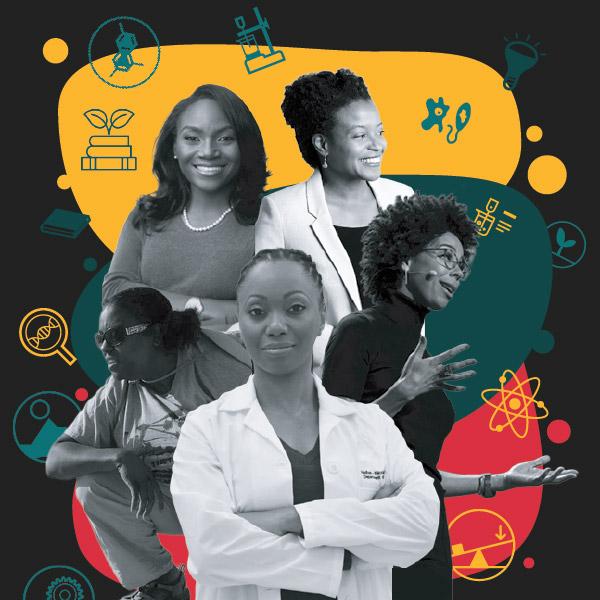
Black History Month offers a powerful opportunity to celebrate historical milestones as well as highlight Black scientists and engineers who are shaping the world right now. From vaccine development and climate justice to clean energy and cancer research, today’s Black researchers are tackling urgent, real‑world problems with data, creativity, and persistence.
For students, representation matters—and so does relevance. When learners see scientists whose work connects directly to issues they hear about in the news, their communities, and their own lives, science becomes something they can imagine themselves doing. Here are several contemporary Black women in STEM whose work is influencing public health, environmental policy, energy systems, and medicine today—paired with hands-on Vernier investigations that help students explore related themes and core concepts.

Dr. Kizzmekia S. Corbett
Viral Immunologist and Vaccine Innovator
Dr. Kizzmekia Corbett is a viral immunologist whose research focuses on the immune response to emerging infectious diseases and vaccine development. She is widely recognized for her role in advancing mRNA vaccine technology and for helping translate fundamental immunology research into real-world public health solutions.
Dr. Corbett served as a research scientist at the National Institutes of Health, where she played a central role in developing the scientific concept behind mRNA‑1273, one of the first widely authorized COVID‑19 vaccines. Her work helped move the vaccine from viral genetic sequencing to a Phase 1 clinical trial in just 66 days, demonstrating how foundational research in virology and immunology can rapidly inform medical innovation.
Beyond COVID‑19, Dr. Corbett’s research has focused on universal coronavirus and influenza vaccines, therapeutic antibodies, and pandemic preparedness. She is also a strong advocate for STEM education and science communication, particularly in underserved communities. Dr. Corbett is currently a faculty member at Harvard University and was named a 2025 Pew Biomedical Scholar.
Connect to Your Classroom
Dr. Corbett’s work provides a real‑world context for teaching core concepts in immunology, human physiology, and chemistry.
Students can model respiratory patterns and investigate lung function with sensors to explore how biological systems respond to changing physiological conditions. To connect virology to chemistry fundamentals, students can also investigate molecular interactions—such as solution concentration, pH, or reaction rates.

Dr. Lisa Dyson
Physicist and Clean Energy Entrepreneur
Dr. Lisa Dyson is a physicist whose work applies principles from physics and bioengineering to climate and food systems. She is the founder of Air Protein, where she helped develop a process that uses microbes to convert carbon dioxide into protein, an approach inspired by earlier NASA research on closed-loop life support systems.
Dr. Dyson earned her PhD in physics from the Massachusetts Institute of Technology, where her research focused on complex systems, energy, and string theory. Her background in physics provides the foundation for understanding how matter and energy move at the molecular level, enabling the transformation of carbon dioxide into usable materials. Her work bridges fundamental physical science with practical applications in food technology and sustainability.
Her interest in climate solutions deepened while working with communities affected by Hurricane Katrina, where she observed how environmental disruptions disproportionately impact vulnerable populations. Dr. Dyson’s career illustrates how core concepts from physics and biology can be applied to address challenges related to resource use, climate change, and food production.
- Learn more about Air Protein
- Watch the TEDx Talk “Turning CO2 into oil”
- Watch the TED Talk “A forgotten Space Age technology could change how we grow food”
- Follow Dr. Dyson on social
Connect to Your Classroom
Dr. Dyson’s work provides a real‑world context for teaching the carbon cycle as well as how matter and energy move through natural and engineered systems.
Students can use the Go Direct® CO2 Gas Sensor to investigate how carbon dioxide is cycled, transformed, and stored by modeling carbon flow through biological and chemical processes.
Research Foundation
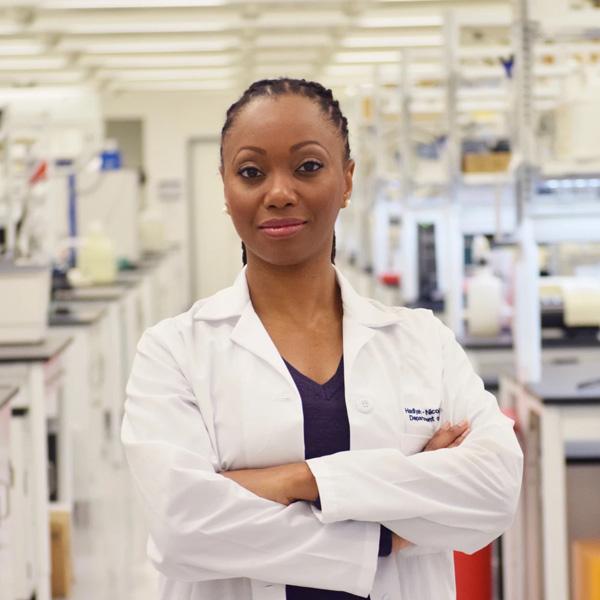
Dr. Hadiyah-Nicole Green
Medical Physicist and Cancer Researcher
Dr. Hadiyah‑Nicole Green is a nationally recognized physicist and cancer researcher whose work focuses on developing non‑invasive cancer treatments using laser‑activated nanotechnology. She is currently a research faculty member in the Department of Surgery at Morehouse School of Medicine.
Dr. Green earned her PhD in physics from the University of Alabama at Birmingham and has more than a decade of interdisciplinary research experience spanning nanotechnology, laser physics, and biomedical applications. She is the inventor of a patent-protected Laser-Activated NanoTherapy (LANT), which has demonstrated complete tumor elimination in laboratory mice after a single 10‑minute treatment, with no observable side effects. Her work highlights how foundational concepts—like light, energy, and matter—can drive cutting-edge medical innovation.
Her research is deeply personal. After serving as a primary caregiver for her aunt and uncle during their cancer treatments, Dr. Green committed her career to finding more effective and humane alternatives. She founded the Ora Lee Smith Cancer Research Foundation in honor of her aunt, with the mission of advancing accessible, affordable cancer treatments and funding human clinical trials.
Connect to Your Classroom
Dr. Green’s work offers a real‑world example of how light interacts with matter, specifically how absorbed light energy can produce heat and drive physical or chemical change.
Students can explore these ideas using the “Reflection and Absorption of Light” experiment, which examines how different materials absorb light and how that absorption translates into temperature change.
At the molecular level, her research also connects to spectroscopy and kinetics. Using the Go Direct SpectroVis® Plus Spectrophotometer, students can investigate light absorbance to track concentration and reaction rate, reinforcing how scientists use light to measure change.
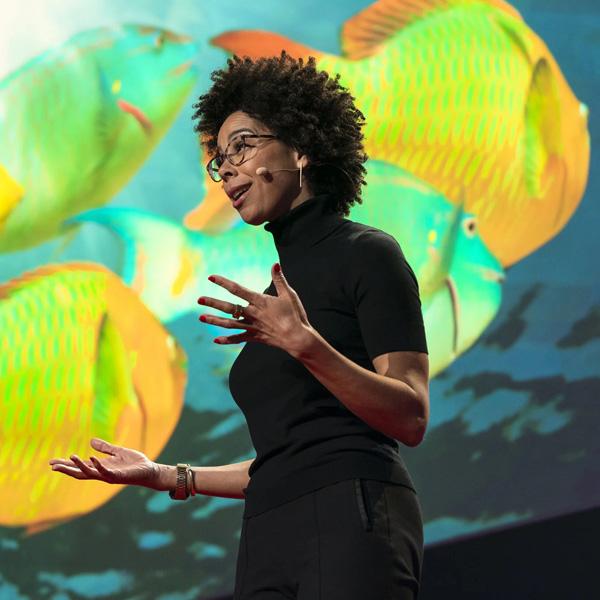
Dr. Ayana Elizabeth Johnson
Marine Biologist and Climate Solutions Advocate
Dr. Ayana Elizabeth Johnson is a marine biologist whose work focuses on understanding marine ecosystems and applying climate science to real‑world decision‑making. She earned her PhD in marine biology from the Scripps Institution of Oceanography, where her research examined coral reef ecosystems and how environmental stressors affect reef health and resilience.
Dr. Johnson’s scientific work explores how physical, chemical, and biological changes in ocean environments, such as temperature, acidity, and nutrient availability, influence marine ecosystems. In addition to conducting research, she applies scientific evidence to climate policy, environmental planning, and public communication, emphasizing solutions grounded in data, systems thinking, and long-term sustainability.
She is the co-founder of Urban Ocean Lab, a think tank focused on coastal climate solutions, and the author of What If We Get It Right?: Visions of Climate Futures. Through her writing, research, and public engagement, Dr. Johnson works to make climate science accessible and actionable for communities, policymakers, educators, and students.
- Watch the TED Talk “A coral reef love story”
- Read more about Dr. Johnson
- Read writing by Dr. Johnson
- Follow Dr. Johnson on social
Connect to Your Classroom
Dr. Johnson’s work provides a real‑world context for teaching marine and environmental science concepts related to ecosystem health and climate change.
Students can measure variables such as pH, temperature, and dissolved oxygen to investigate how physical and chemical conditions influence aquatic ecosystems. Try this ocean acidification investigation with pH sensors to help students model how increased atmospheric CO₂ affects marine environments and organism health.
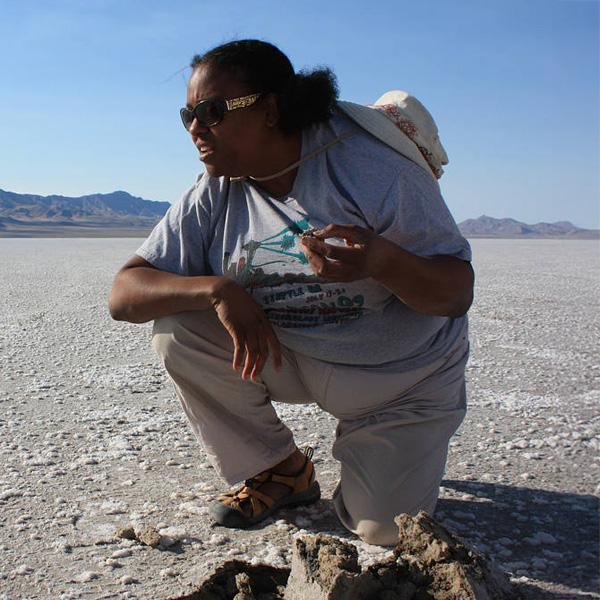
Dr. Kennda Lynch
Astrobiologist and Geomicrobiologist
Dr. Kennda L. Lynch is an astrobiologist and geomicrobiologist whose research focuses on identifying where life might exist beyond Earth by studying extreme environments on our own planet. She is a Program Scientist at NASA, where she works at the intersection of planetary science, astrobiology, and mission planning.
Dr. Lynch studies environments such as hypersaline lakes and ancient lake beds on Earth, which serve as analogs for places scientists believe once held water on Mars. Her research in Utah’s Great Basin paleolakes—including Pilot Valley—has contributed to studies connected to the landing site of NASA’s Perseverance rover in Jezero Crater. By examining how microbes survive in harsh conditions and the chemical and mineral signatures they leave behind, her work helps scientists identify biosignatures of past or present microscopic life.
Before earning her PhD in environmental science and engineering, Dr. Lynch worked as an engineer on projects for the International Space Station and at NASA’s Johnson Space Center, giving her a background that bridges engineering and science. She is also active in teaching and mentoring, helping students see how interdisciplinary science supports planetary exploration.
- Read Q&A with Dr. Lynch
- Watch the NASA video “Countdown to Mars”
- Watch: Alien Worlds Episode 2 “Janus” on Netflix
- Follow Dr. Lynch on social
Connect to Your Classroom
Dr. Lynch’s work provides a real‑world context for teaching Earth science, chemistry, and biology through the study of extreme environments.
Students can use sensors to investigate environmental factors such as salinity, surface temperature, light, and weather variables, building an understanding of how scientists characterize unfamiliar environments. They can then explore how these conditions affect living organisms through experiments that explore photosynthesis in algae or the impact of temperature on biological activity.
Looking for more ideas to inspire conversations about Black History Month and notable contributions to STEM fields? Check out these resources.
Share this Article
Related Articles




Sign up for our newsletter
Stay in the loop! Beyond Measure delivers monthly updates on the latest news, ideas, and STEM resources from Vernier.