
Sharing ideas and inspiration for engagement, inclusion, and excellence in STEM
Halloween is the perfect opportunity to make science a little more engaging—and a lot more memorable. With just a touch of creative framing, you can add a spooky, seasonal twist to these Vernier experiments across chemistry, biology, or physics.
From exploring the glow in glowsticks to tracking heart rates during a scare, these hands-on ideas use Go Direct® sensors and Vernier Graphical Analysis® to help students explore core science concepts through a new (and slightly eerie) lens.
1. Food Is Fuel: Testing the Energy in Halloween Candy
Experiment: Food Is Fuel
In this experiment, students use the Go Direct Temperature Probe to measure how much energy food releases when burned. This classic calorimetry experiment helps students understand the connection between chemical energy and heat.
Halloween spin: All that Halloween candy can do more than fuel a sugar rush. Invite students to bring in their favorite candies and test which ones produce the most energy. You’ll find that some melt before they burn, revealing interesting differences in fat and sugar content. In our lab, peanut M&M’s and marshmallow treats delivered the most consistent results.
Tip: Have students hypothesize which candy will pack the most energy before running their tests, then compare their predictions to the data. Generally, we found that chocolate treats were less successful, but they did smell great.
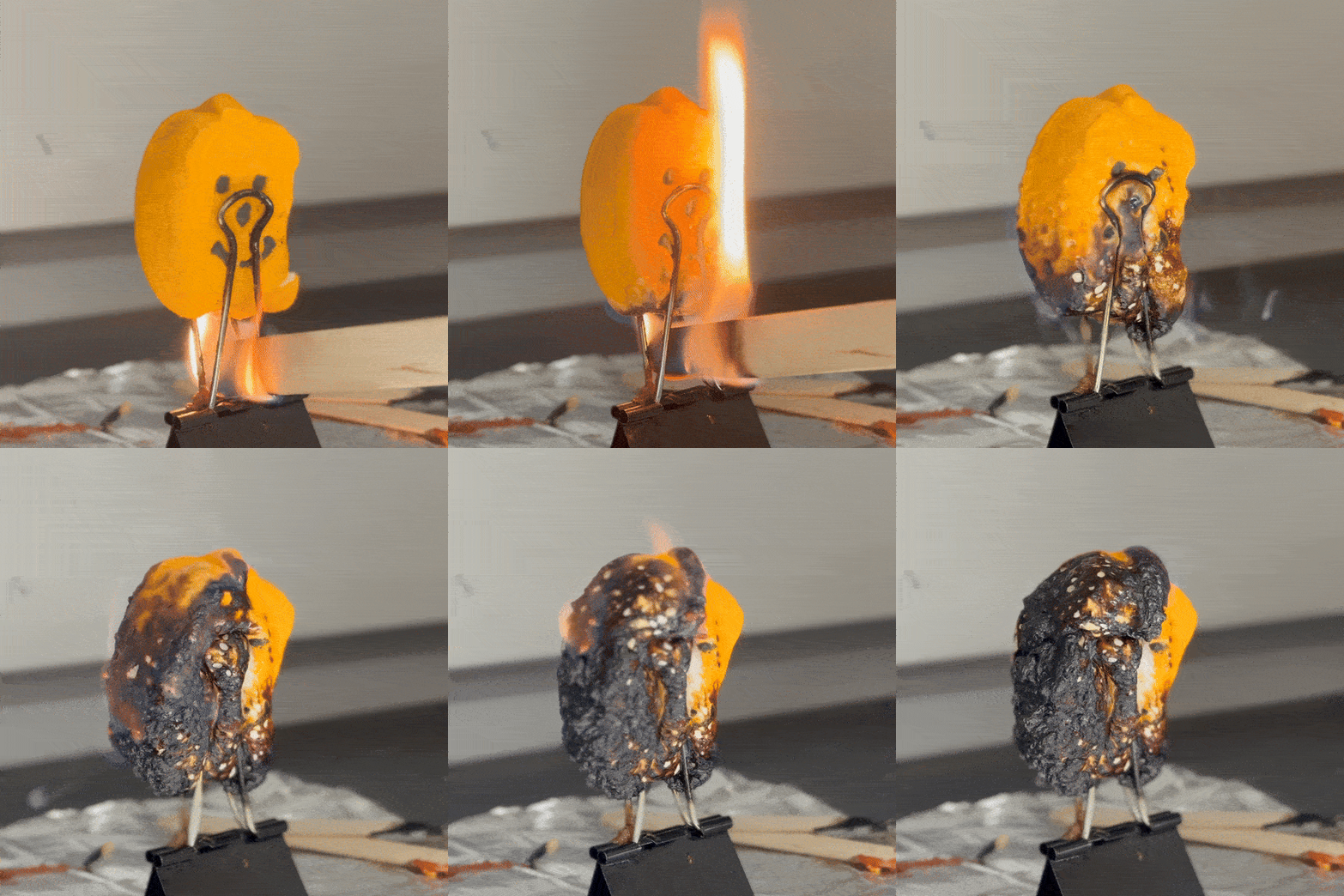
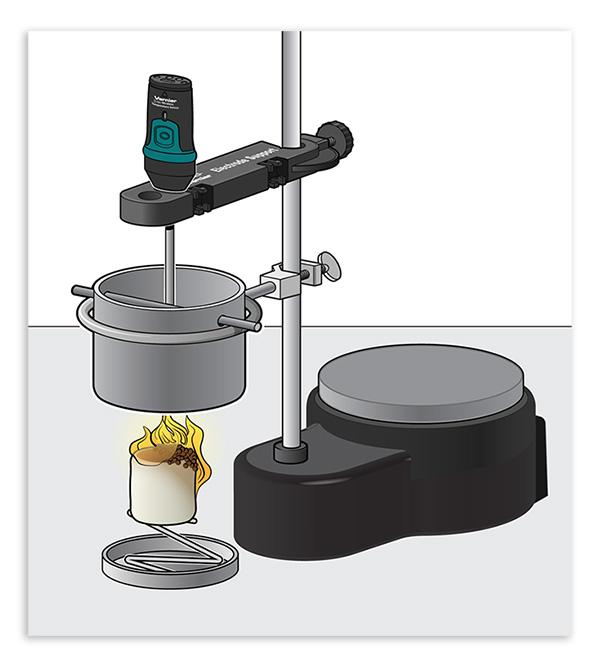
We used jack-o-lantern marshmallows and Peanut M&Ms in this adaptation of Food Is Fuel.
2. Secret Message: The Chemistry Behind Fluorescence and Glow
Experiment: Secret Message
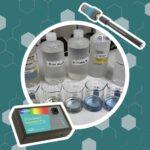
Glowsticks and fluorescent paints are Halloween staples—and perfect for exploring the chemistry of light. Using the Go Direct SpectroVis® Plus Spectrophotometer, students can investigate how energy absorption and release cause materials to fluoresce. It’s a visually engaging way to teach about electron transitions and chemical energy.
Halloween spin: Turn your classroom into a “forensic lab” where students write secret messages with fluorescent markers and reveal them under UV light.
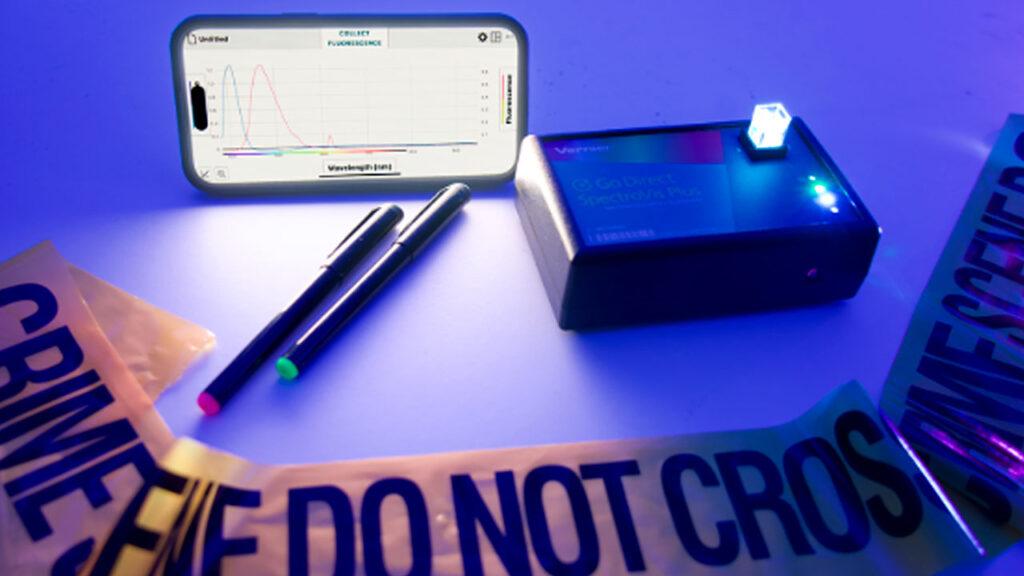
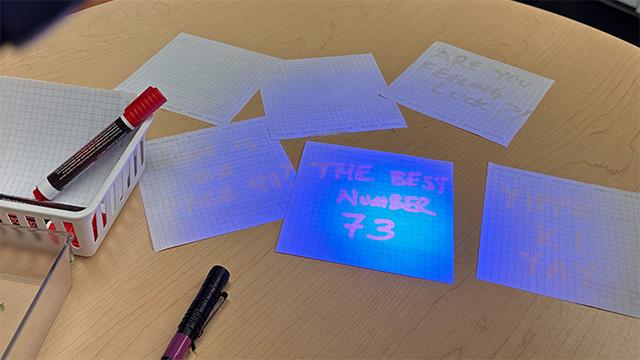
Students write hidden messages with fluorescent markers, then reveal them under UV light.
3. Scared Science: Measuring the Body’s Stress Response
Experiment: Listen to Your Heart: Blood Pressure, Biofeedback, and the Science of Stress
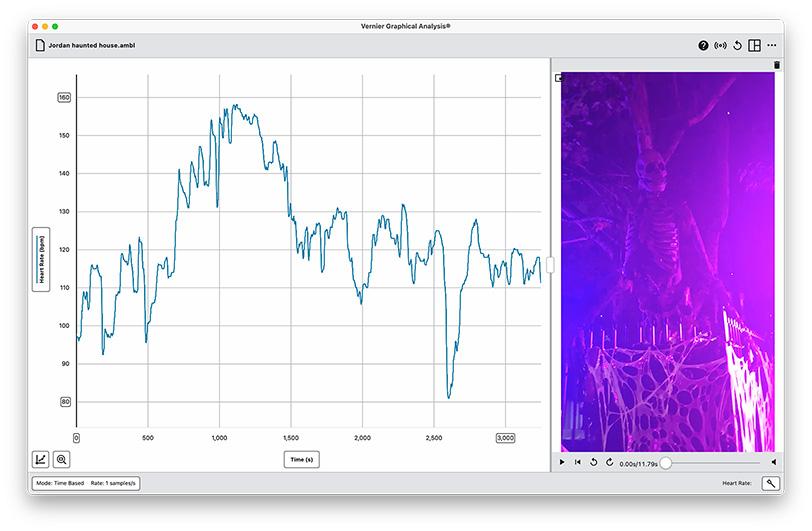
When we get startled, our bodies respond immediately. Students use the new Go Wireless® Optical Heart Rate, along with the Go Direct Blood Pressure Sensor, to measure physiological changes during mild stress. The data helps them explore biofeedback, homeostasis, and autonomic reflexes in the nervous system.
Halloween spin: Replace the traditional ice-water challenge with a “haunted” stress test—use suspenseful music, dim lighting, or a brief jump-scare video to simulate fear. Then compare pre- and post-test readings to see how quickly participants recover.
Tip: Keep it mild and safe—students should feel surprised, not frightened.
4. Why Isn’t There Dead Stuff Everywhere? Exploring Decomposition
Experiment: Exploring the Nature of Decomposition with a CO₂ Gas Investigation
In this experiment, students use the Go Direct CO₂ Gas Sensor to measure carbon dioxide released as organic material decomposes. They connect their findings to the carbon cycle and explore the essential role decomposers play in ecosystems.
Halloween spin: Present this as a “zombie investigation”—what does it actually mean to “reanimate” the dead? Have students measure CO₂ output from different organic materials or conditions to uncover how decomposers do their work.
Tip: Compare decomposition rates of different materials or environments to extend the investigation.
5. The Sound of Fear: Analyzing Scary Animal Calls
Experiment: Animal Acoustics: Analyzing Sound Waves in Physics and Biology
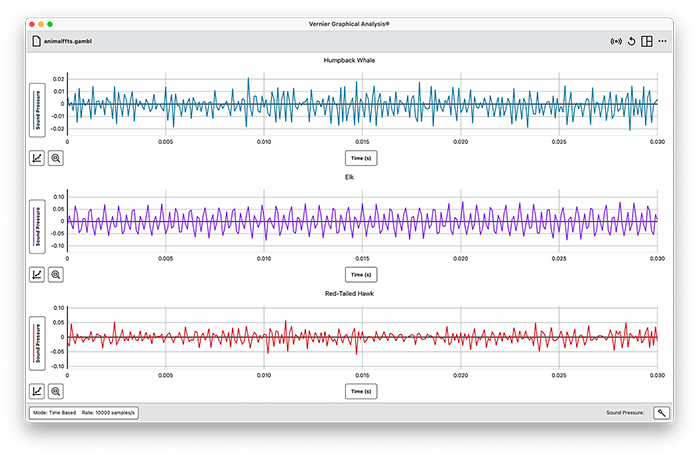
Using the Go Direct Sound Sensor, students analyze sound recordings, such as animal calls, to explore pitch, amplitude, and waveform patterns. This is a cross-disciplinary way to explore sound and perception while comparing patterns across species.
Halloween spin: What makes certain sounds feel creepy? What animal do students think sounds the scariest—and what about it makes it sound that way? Have students compare “scary” calls—like barn owl, red fox, mountain lion, or loon—and analyze what makes them sound unsettling. Discuss how animals use sound for communication, warning, or navigation.
Tip: Discuss how animals use sound to communicate warning, attract mates, or navigate in the dark—and relate it to bat echolocation using the Go Direct Motion Detector!
More Spooky Science Ideas
- Watch: Fall Into Science: Seasonal Investigations with Vernier
- Read: Smashing Squash and Regurgitating Gourds: Eerie Experiments for Your Physics and Chemistry Classes
Have your own Halloween-inspired experiment or student results to share? Let us know at blog@vernier.com or share with us on social! Questions? Reach out to support@vernier.com, call 888‑837‑6437, or drop us a line in the live chat.
Share this Article
Related Articles




Sign up for our newsletter
Stay in the loop! Beyond Measure delivers monthly updates on the latest news, ideas, and STEM resources from Vernier.