Sharing ideas and inspiration for engagement, inclusion, and excellence in STEM
The Rio Grande Valley sits at the southernmost tip of Texas—a region rich in culture and deep community roots, where many students are the first in their families to pursue higher education.
The Gaining Early Awareness and Readiness for Undergraduate Programs (GEAR UP) initiative at University of Texas Rio Grande Valley (UTRGV) works to expand those opportunities—supporting approximately 5,200 students across five school districts from middle school through college entry. The program has a specific focus on increasing passing rates on state science assessments, expanding access to advanced coursework like AP and dual enrollment, and strengthening college readiness. At the same time, the program invests in teachers by focusing on embedded professional development to help them increase student outcomes on these performance standards.
To drive these outcomes and address gaps in science achievement and student engagement, UTRGV GEAR UP has implemented a comprehensive approach centered on hands-on investigation and real-world data-collection. By equipping teachers with both the tools and ongoing support they need, the program is helping transform how science is taught and experienced across its partner districts.
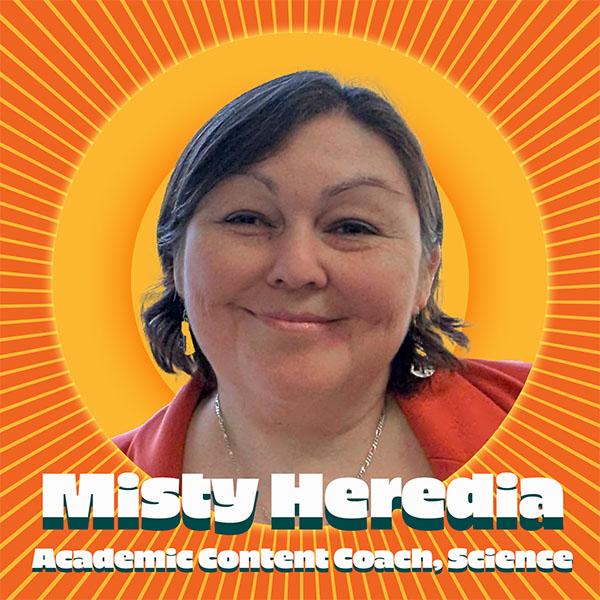
For Misty Heredia, the program’s academic content coach for science and a former secondary STEM teacher, this mission is deeply personal and grounded in her own experience engaging students in meaningful, real‑world learning.
Organization Snapshot:
University of Texas Rio Grande Valley (UTRGV) GEAR UP
Rio Grande Valley, Texas
• Partners with 5 districts, serving teachers across 19 campuses (Donna ISD, Edinburg CISD, McAllen ISD, Mission CISD, and Weslaco ISD)
• Serves approximately 5,200 students in their grant cohort
• Emphasizes STEM education through hands‑on learning and college readiness initiatives
“Having spent 21 years teaching—including as a GEAR UP educator myself—I understand what teachers need to succeed,” said Heredia, who leads professional development and instructional support across five districts in Hidalgo County. “When I started this role at UTRGV GEAR UP, I knew that integrating data‑collection technology across our partner districts would be especially powerful because I had seen its impact firsthand in my own classroom.”
Addressing Gaps in Student Engagement and Achievement
Assessment data showed students across UTRGV GEAR UP’s partner districts were consistently struggling with data analysis and key science concepts, such as Newton’s laws. At the same time, teachers were adapting to new state standards that emphasize three‑dimensional, inquiry‑driven learning.
“Even with the increased focus on testing, we know students can’t just sit through drills and benchmarking all day—who wants to go to school when that’s all you do?” said Heredia. “Students need to actually experience what they are learning.”
To address these challenges, UTRGV GEAR UP partners with Vernier Science Education to support hands-on, student-led instruction. Through this strategic partnership, the program and Vernier equip teachers with data-collection technology, including probeware and software, as well as with ongoing, job-embedded support to help them feel comfortable and confident using the technology.
“Some teachers are intimidated to try out the technology at first,” said Heredia. “But once they have time to explore it and actually use it, everything shifts.”
Building Teacher Confidence with Data‑Collection Technology Through Ongoing Support
A key differentiator of UTRGV GEAR UP is its emphasis on continuous professional learning. They provide teachers in their partner districts with:
- Multi-session professional development workshops throughout the year
- On-campus coaching and classroom modeling
- Ongoing troubleshooting and instructional support
- Collaborative professional learning communities (PLCs)
As part of the on-site support, Heredia and her team regularly visit teachers at their schools to host workshops, help build classroom labs for upcoming semesters, and answer any questions about the science curriculum. Vernier Science Education reinforces this model through in-person professional learning events held at UTRGV twice a year, where teachers receive expert guidance on using sensors and probeware effectively in their classrooms.
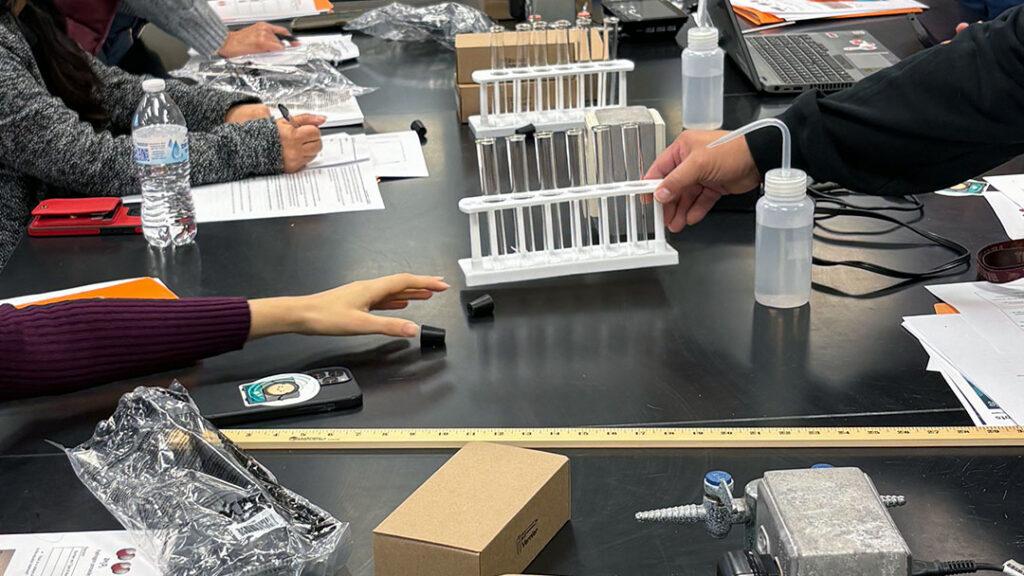
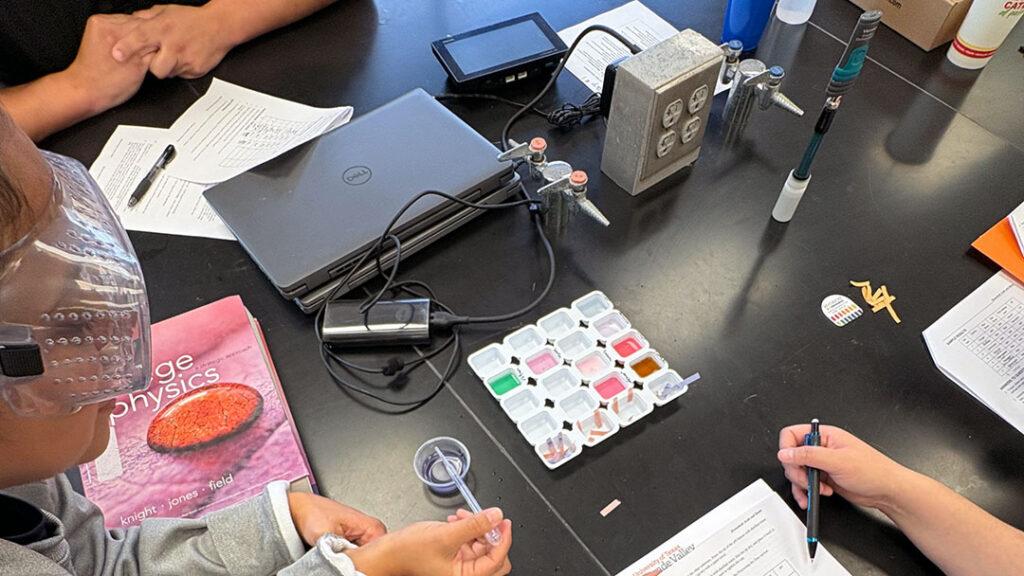
During a recent on-site training, teachers worked through past STAAR exam questions alongside relevant hands-on Vernier investigations—connecting state assessment concepts directly to lab activities and personalizing them for their own classrooms. They used force plates and sensor carts to study force and acceleration, pH and temperature sensors to explore chemical reactions, and Vernier Video Analysis® to study motion using videos created with their students.
“The teachers came ready with questions, success stories, and eagerness for more ideas,” said Ann Hammersly, director of district outreach for Vernier Science Education. “They were excited to try new things, adapt the lessons for their classrooms, master the use of the sensors and software, and help their students explore a science environment that is exciting, challenging, and encourages growth and learning.”
This multi-faceted approach has led to a noticeable shift in teacher mindset and adoption. In fact, a number of teachers who were initially hesitant are now actively integrating data collection into their instruction and sharing strategies with peers.
“The ongoing support makes such a difference for teachers,” said Heredia.
Making Real-World Connections with Data‑Collection Technology
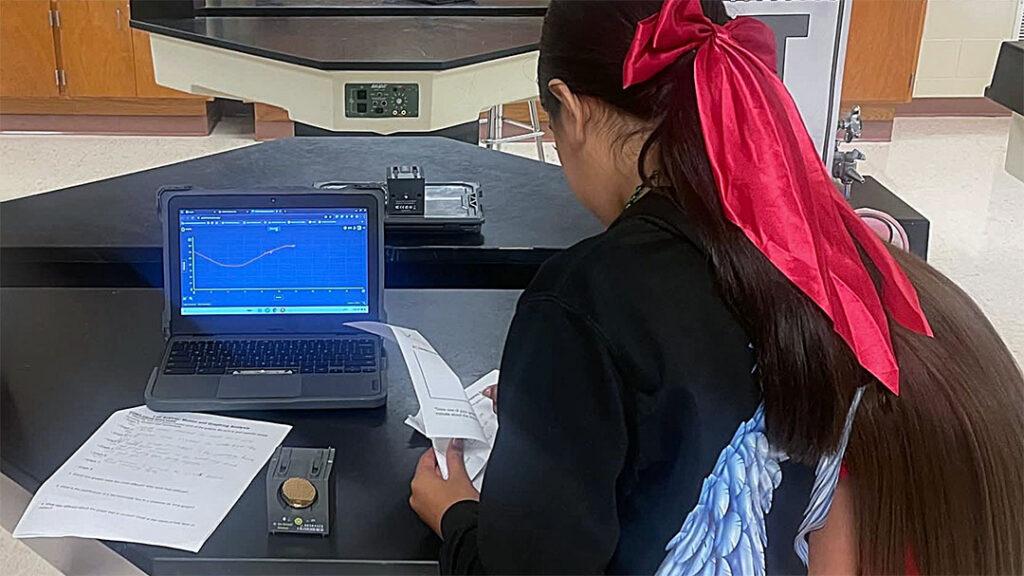
With a new increased focus on hands-on learning, teachers are no longer relying strictly on lectures or worksheets. Instead, students are actively exploring scientific concepts by collecting and analyzing their own data in real time.
“Using Vernier has brought science to life in the classroom,” Heredia said. “It’s one thing to look at a graph on paper, but when students can physically collect data in real time, their understanding deepens in a completely different way.”
The shift to hands-on learning has also helped increase student engagement, especially among students who previously struggled with science. For example, while working with a group of students in a remediation setting, Heredia introduced Go Direct Motion Detectors and Go Direct Force Plates to teach students key concepts.
“It just clicked and students started asking for more,” she said. “They were saying, ‘Can we do weather next? Can we do Newton’s laws?’ It was one of my teary-eyed moments.”
During a STAAR Review Camp, one teacher even reflected, “I am surprised that all of my students are actually participating, even the students who typically refuse to participate.”
Data collection also helps students to make connections between what they are learning in the classroom with the world around them. “I’ve had students tell me they were thinking about projectile motion during swim competitions,” Heredia said. “That’s when you know the learning stuck.”
Hands-on learning is helping students build confidence in their abilities, both in and out of science, and providing them with increased STEM exposure and opportunities.
“Many of our students wouldn’t otherwise have access to this kind of learning. We’re opening doors for them and having a real impact,” said Heredia. “When a student comes up and says, ‘I feel smart,’ that’s everything. That’s something you can’t measure with a test score.”
Why Ongoing, Hands‑On Science Matters
As UTRGV GEAR UP continues to support its cohort into high school, and looks to drive outcomes for all students, the program is expanding its focus to areas such as biology instruction. Across each campus, the use of data-collection technology will continue to be an integrated part of teachers’ instruction and will now be supported by the use of the Vernier Connections® platform, which will provide teachers with phenomena-based and standards-aligned activities, investigations, and assessments to help students to explore and apply scientific concepts in meaningful ways.
For GEAR UP grantees looking to support student achievement in science, UTRGV GEAR UP demonstrates that strategic partnerships—like its collaboration with Vernier Science Education—combined with hands-on, data-collection technology, and sustained professional development can drive meaningful change. This approach supports teacher growth, increases student engagement, and helps students build confidence and critical thinking skills that extend beyond the classroom.
“We’re giving students the opportunity to discover science for themselves,” said Heredia. “And we’re showing them that they can succeed.”
Ready to bring this kind of learning to your program?
Vernier works alongside GEAR UP programs and educators to find the right science technology solutions for your schools and classrooms—from equipment planning to implementation support.
Learn more about our support for GEAR UP grantees or reach out to
k12outreach@vernier.com to start a conversation.
Share this Article
Related Articles

Sign up for our newsletter
Stay in the loop! Beyond Measure delivers monthly updates on the latest news, ideas, and STEM resources from Vernier.