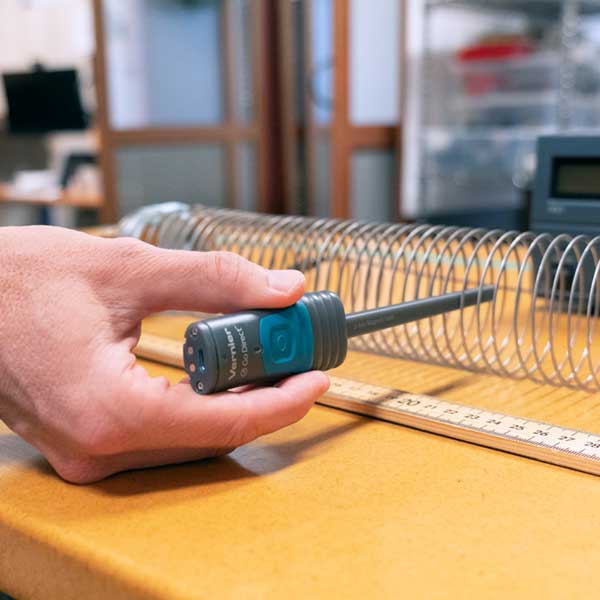
Looking for fresh ways to engage your students in the study of magnetic fields? Guide your students through the invisible forces that influence our world with the Go Direct 3-Axis Magnetic Field Sensor.
This versatile tool measures the comp...
As we gear up to welcome students back to the classroom, it’s the perfect time to strategically introduce (or reintroduce) the fundamental principles of data collection. No matter the subject, understanding how to collect, analyze, and interpret d...
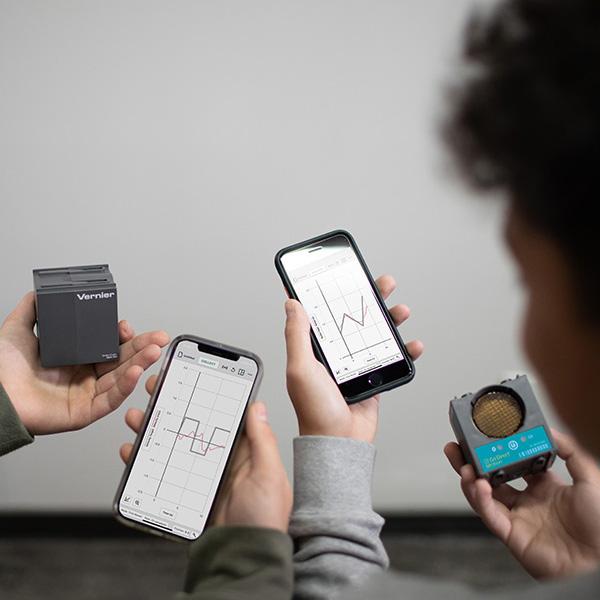
One of the most versatile ways for students to measure motion—a key scientific concept—is the Go Direct® Motion Detector.
This sensor uses ultrasound to measure the position, velocity, and acceleration of moving objects. Specifically, the Go Dir...
Linda Antinone’s overarching goal is simple: help more underrepresented students be successful, especially when it comes to STEM. Linda is an Albert Einstein Distinguished Educator Fellow, educational specialist, coach, trainer, and author with ex...
At Vernier, our goal is to help all students become STEM-literate citizens. So, as we develop lessons for Vernier Connections, it is critical that we design a journey that will support the learning of all students.
This is why we decided to groun...
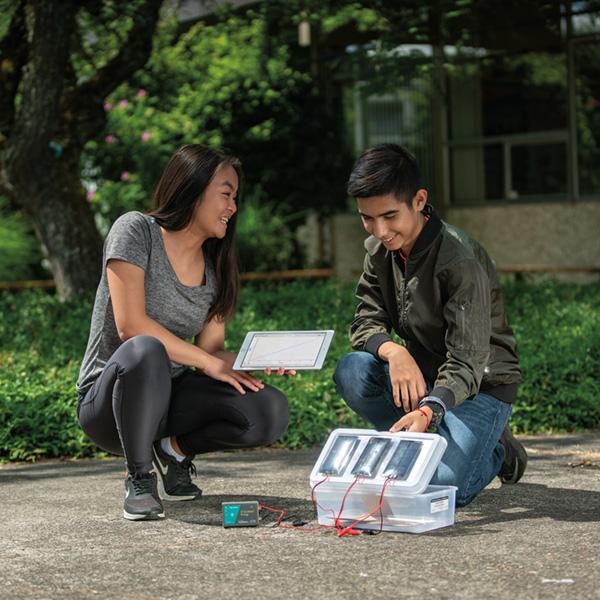
Looking for a way to explore solar energy in your class—and promote hands-on science learning at the same time? KidWind, our line of renewable energy products, includes solar panels appropriate for teaching students from K–12 to college.
...
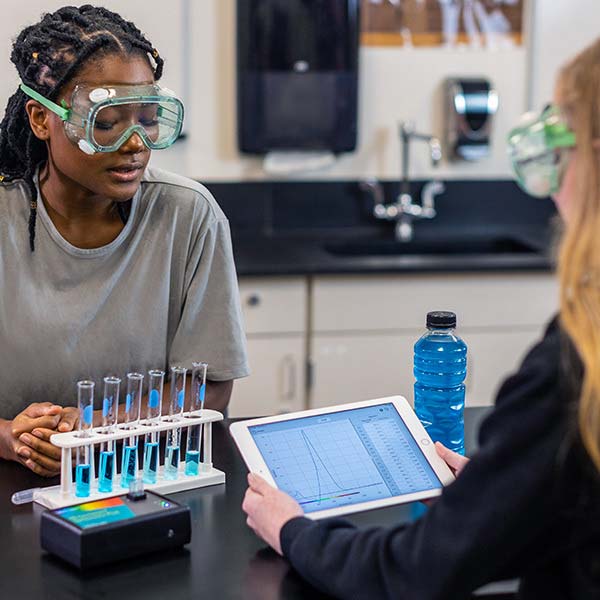
It can be challenging for students to wrap their minds around key chemistry concepts, such as pH, Beer’s law, and gas conversions. You can help demystify these abstract scientific ideas with hands-on learning that incorporates common household ite...
Climate change is a complex, long-term process, so it can be challenging to conduct classroom experiments that show the phenomenon.
However, it is relatively easy to conduct experiments that show the concepts behind factors related to climate cha...
In middle school science classes, data-collection technology is a great tool for promoting hands-on learning. This school year, Jeff Branchaud and his students are using an additional tool: a 55-gallon classroom aquarium.
Branchaud, who tea...
All students benefit when they can apply physics principles and concepts by building something. Having that real-world connection can help make physics easier to understand. As an added bonus, it can also increase student engagement.
During...