
Sharing ideas and inspiration for engagement, inclusion, and excellence in STEM
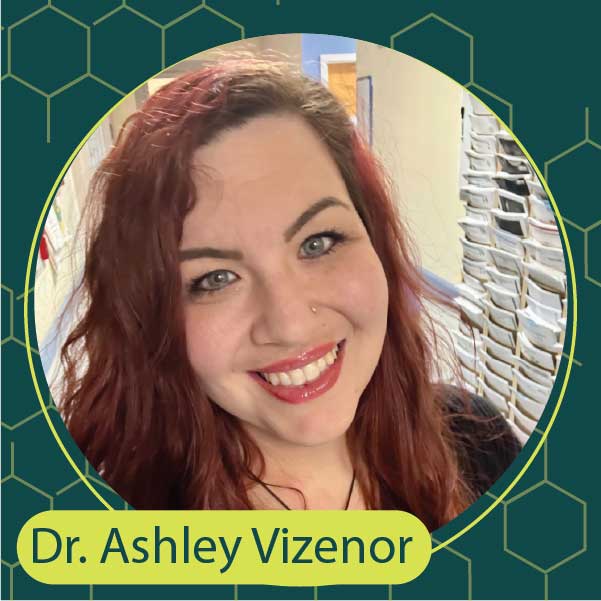
At Barstow Community College in Barstow, California, Dr. Ashley Vizenor teaches chemistry and physical science to students pursuing a wide range of paths—from chemistry and biology majors to future nurses, allied health professionals, and educators.
Like many community college faculty members, Vizenor also works within some very real constraints. Barstow is a small, rural college with only two full-time chemistry instructors, and faculty regularly take on overload courses to meet student demand. Lab enrollment can range from a handful of students in upper‑level chemistry to sections of 20 or more in general chemistry and allied health courses—realities that make every decision about lab equipment, curriculum, and instructional time matter.
“STEM is just inherently expensive,” she said. “And being a small school, budget is also a factor.”
But Vizenor sees hands‑on laboratory experience as something worth protecting—particularly when it gives students opportunities to become comfortable with scientific instrumentation they may encounter later in their education or careers. Finding affordable, high-quality college chemistry instrumentation helps her make that investment go further.
Getting More Instrumentation into Students’ Hands
When Vizenor started at Barstow Community College in January 2020, the chemistry department was gearing up for a full lab reset. As she began pricing spectrometers similar to those she’d used in other academic labs, a colleague suggested she look at Vernier first—the anatomy and physiology program had been using Vernier equipment for years with good results.
“I found the Vernier spectrometers and thought, ‘Oh my gosh, we could literally get four of these for the price of one of the other ones,’” Vizenor said. “I realized there was so much more that we could get for our money.”
Instead of spending most of the available funding on only a few instruments, Vizenor could spread those resources across more of the lab.
“We were able to purchase a lot more and have much more available to our students,” she said. “That enabled us to buy other instrumentation for organic chemistry that we wouldn’t have been able to buy had I gone with the more expensive things.”
With that flexibility in the budget, Vizenor was able to bring instrumentation such as the Go Direct® SpectroVis® Plus Spectrophotometer ands well as the Go Direct Mini GC™ into the Barstow chemistry labs, with plans to explore even more applications in fluorescence, environmental analysis, and green chemistry.
Moving Chemistry Beyond the Textbook
For Vizenor, having access to high‑quality instrumentation is about more than just completing a particular experiment. It gives students a chance to connect a chemistry concept to something they can actually observe, measure, and analyze.
“We can teach a concept all we want, but until students actually see it in action, it’s really hard for them to understand how it works,” she said. “I also want them to know there’s so much more to learn outside of their textbook.”
One of her favorite labs to do with students is Beer’s law. Students begin by observing that a solution becomes darker as its concentration increases. With a Go Direct SpectroVis Plus Spectrophotometer, however, that qualitative observation becomes quantitative data as students measure absorbance and investigate the relationship themselves.
That progression—from seeing a phenomenon to putting numbers behind it—is an important part of the experience, as is learning how to use scientific instrumentation.
“You can learn the inner workings of something or learn the concepts of it or even do a virtual lab, but it still isn’t the same as actually pushing the buttons and touching it,” Vizenor said.
Building Confidence and Laboratory Skills with Scientific Equipment
That direct experience also helps students become more comfortable around scientific equipment.
Vizenor wants students to reach a point where they are, as she puts it, “not afraid to break it.” Working directly with a spectrometer, for example, gives her students experience loading and cleaning a cuvette, collecting measurements, troubleshooting, and learning the basic practices involved in using a high-quality analytical instrument.
The exact equipment students encounter later may look different, but that hands‑on experience and initial familiarity give them a valuable foundation to build on.
“It really helps make it more accessible and helps build their confidence,” Vizenor said. “As they transfer or go on to a job, they can say, ‘I’ve worked with a spectrometer before. I’ve already had this experience. I’m not afraid to jump right in and start using it.’”
Making Hands-On Chemistry Accessible in a Small Community College Department
Community college chemistry departments can look very different from large university programs. Faculty may be teaching multiple courses, preparing labs, writing curriculum, managing equipment, and supporting students without graduate TAs or extensive technical staff.
“A lot of community colleges don’t have TAs,” Vizenor said. “For instructors who are writing lab manuals and writing labs, having, at the very least, a starting point goes so far. To have that already written out is priceless for really knowing where to start.” Vernier lab books and experiment resources can provide that starting point.
Keeping costs down for students matters just as much. The chemistry department uses open educational resources and provides lab manuals rather than requiring students to purchase them separately—and the instrumentation itself plays a role too. When equipment supports Bluetooth® wireless technology, students can use compatible devices without needing a dedicated computer at every lab station.
“Having affordable instruments that our students can really get to touch and play with—and use their phone to connect to without having to worry about having computers—really does go a long way toward increasing accessibility,” she said.
Did you know? If your school has purchased a Vernier lab book, check your Vernier account for the most up-to-date version of the book and its experiment files.
Continuing to Evolve the Chemistry Lab
As an analytical chemist with a background in environmental and chemical engineering, Vizenor is particularly interested in bringing more green chemistry, as well as environmental and analytical chemistry, into her courses.
“I think those are important for students to have that hands‑on experience and feel more confident in the lab,” Vizenor said.
For Vizenor, expanding those experiences is another way to help students develop practical lab skills and build confidence—especially when some arrive uncertain about chemistry.
“Many students come in going, ‘STEM, chemistry—this is scary,’” Vizenor said. “I want to be able to make it more accessible to all of them.”
Professional learning is part of that exploration, too. After connecting with the Vernier chemistry team and other educators at summer conferences, Vizenor is excited to explore more green chemistry, incorporate more instrumentation, and keep looking for new ideas she can bring back to her students.
“I’m definitely looking forward to writing some new labs and editing some of our labs to be greener. I really want to dive headfirst into using more instrumentation with my students,” she said. “I want to see what else I can learn and bring back to really help my students learn more and enjoy the learning.”
Explore More College Chemistry Resources
Looking for ways to expand hands-on instrumentation in your college chemistry labs? Explore Vernier resources for college chemistry, including spectroscopy, gas chromatography, and ready‑to‑use experiments that can be adapted for your courses.
Here are a few of our favorite resources and experiments to explore and adapt for your general chemistry courses:
- A Perfect Brew: Teaching Equilibrium with Tea and Vernier Sensors (Webinar)
- Sustainable Spectroscopy: Analyzing Sports Drinks with Beer’s Law in a Green Chemistry Lab (Experiment)
- True Colors: Separating Food Dyes (Experiment)
- The Synthesis and Analysis of Aspirin (Experiment)
- Exploring Light Through Spectroscopy: Two Engaging Experiments for Chemistry Classes (Blog)
- Vernier Green Chemistry Starter Package
Learn more about how Vernier solutions support college chemistry education. Questions about our sensors? Reach out to chemistry@vernier.com, call 888‑837‑6437, or drop us a line in our live chat.
Share this Article
Related Articles


Sign up for our newsletter
Stay in the loop! Beyond Measure delivers monthly updates on the latest news, ideas, and STEM resources from Vernier.